
What is chimney soot? Is it dangerous?
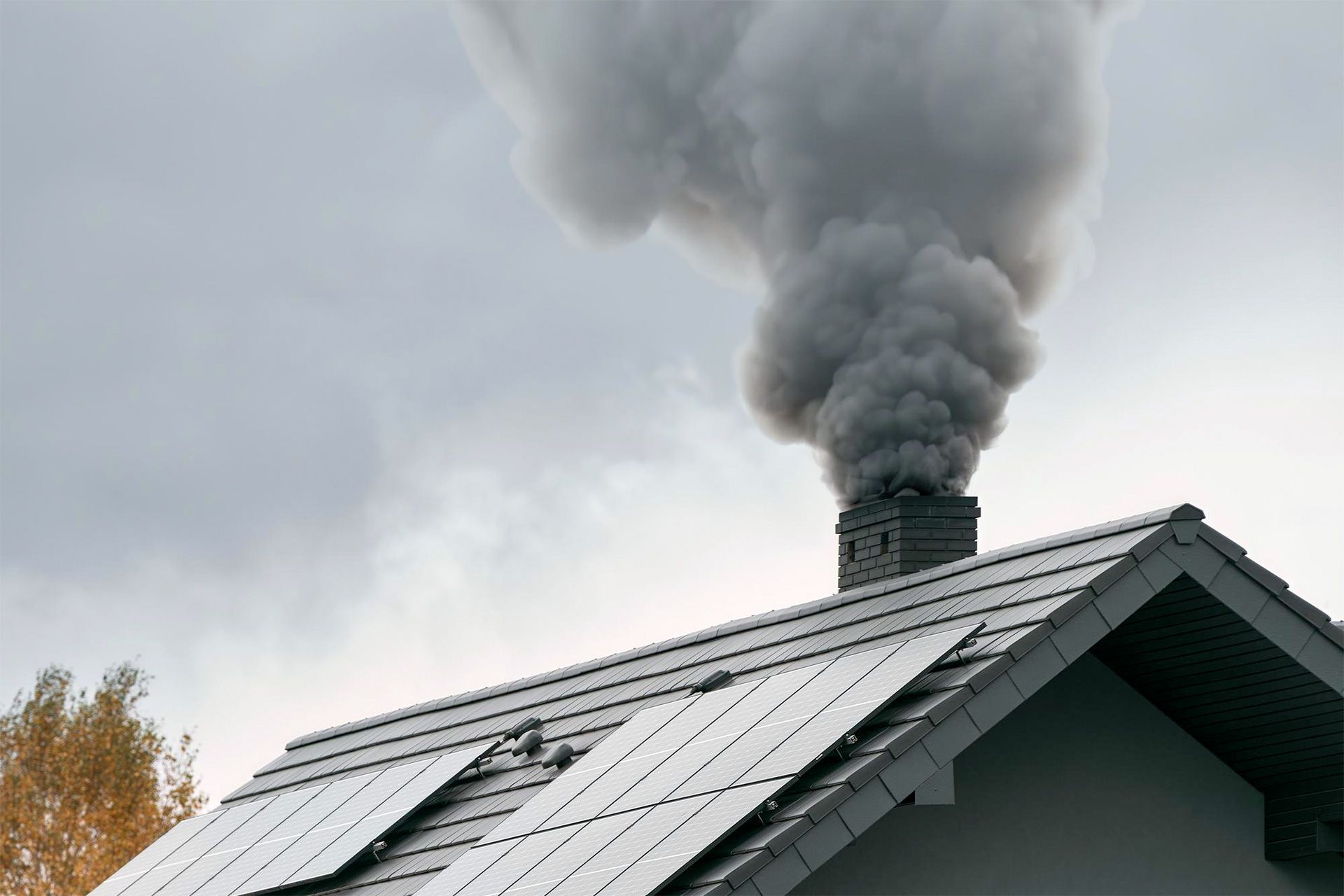
Chimney soot is a dark, powdery residue made mostly of carbon particles that forms when wood or other fuel does not burn completely. A small amount may develop during normal fireplace use, but heavy buildup can point to poor combustion, weak airflow, or a chimney that needs attention. Soot can also affect indoor air quality if smoke or particles enter the living space, so repeated or excessive buildup should not be ignored.
Understanding what soot is, how it differs from creosote, and why it forms can help homeowners make better decisions about fireplace use and maintenance.
What Is Chimney Soot?
Soot is a fine black or dark brown residue created during incomplete combustion.
When wood burns, it produces heat, smoke, gases, ash, and very small particles. If the fire does not burn efficiently, more carbon-rich particles can travel upward with the smoke.
Some of those particles settle on surfaces inside the fireplace and chimney.
You may find soot on:
- The firebox
- Fireplace doors or glass
- The damper
- The smoke chamber
- Visible areas of the flue
- Interior chimney surfaces
- Walls above the fireplace opening
- Nearby surfaces if smoke enters the room
A thin layer of residue can develop with regular wood-burning fireplace use. However, thick deposits or soot spreading into the home may indicate that the fireplace is not venting or burning as efficiently as it should.
How Does Chimney Soot Form?
The amount of soot a fireplace produces depends largely on how efficiently the fuel burns.
A clean-burning fire needs proper airflow, enough heat, and suitable fuel. When those conditions are not present, the fire can produce more smoke and soot.
Several common conditions can contribute.
Wet or Unseasoned Firewood
Wet wood can create a cooler and smokier fire.
Part of the fire's heat must first be used to dry the moisture inside the wood before the wood can burn efficiently.
As a result, the fire may produce more smoke and combustion residue.
Properly seasoned firewood usually burns more efficiently and produces less unnecessary smoke.
Limited Airflow
A wood fire needs oxygen to burn.
If the damper is not fully open, the fireplace has restricted airflow, or the fire is allowed to smolder for long periods, combustion may become less efficient.
That can increase the amount of smoke and black residue moving into the chimney.
Low Fire Temperature
A weak, smoldering fire often creates more smoke than a properly established fire.
Cooler combustion can also allow more particles and other byproducts to collect inside the chimney system.
Poor Chimney Draft
Draft is the upward movement that carries smoke and combustion gases through the flue and outside.
If the draft is weak, smoke may move slowly or spill back toward the room.
Possible draft problems include:
- A blocked flue
- A partly closed damper
- Negative indoor air pressure
- Wind conditions
- Chimney design concerns
- A cold flue
- Debris or animal nesting
When smoke does not move upward as intended, soot may collect in unusual places.
Chimney Soot vs. Creosote: What Is the Difference?
Homeowners often use the words soot and creosote interchangeably, but they are not the same material.
Understanding the difference is important because both can build up inside a wood-burning chimney.
Soot Is Usually Soft and Powdery
Soot is primarily carbon-based residue.
It often looks like black dust or a loose coating on fireplace and chimney surfaces.
If you touch accessible soot with appropriate protection, it may smear easily.
Creosote Can Be Sticky, Flaky, or Hard
Creosote forms when substances in wood smoke cool and condense inside the chimney.
Depending on its stage and condition, it may appear:
- Flaky
- Crusty
- Sticky
- Tar-like
- Shiny
- Hard or glazed
Creosote is particularly important because it can become highly combustible when enough accumulates.
What About Ash?
Ash is another fireplace residue, but it is different from both soot and creosote.
Ash is the loose mineral material left after wood burns.
In simple terms:
| Deposit | Typical Appearance | Main Concern |
|---|---|---|
| Soot | Soft, dark, powdery | Combustion residue and indoor smoke |
| Creosote | Flaky, sticky, tar-like, or glazed | Combustible chimney buildup |
| Ash | Light gray or white and loose | Normal fire residue requiring cleanup |
A chimney can contain soot and creosote at the same time.
Is Chimney Soot Dangerous?
Chimney soot can become a concern when buildup is heavy, enters the living area, or appears along with other fireplace problems.
The risk depends on the amount of residue and what is causing it.
Soot Can Contain Combustible Material
Soot contains carbon, which can burn under certain conditions.
This does not mean every thin coating creates an immediate fire hazard.
However, heavy deposits should not be ignored, especially because soot may exist alongside creosote.
Soot Can Affect Indoor Air Quality
Fireplace smoke contains very small particles.
If the chimney does not vent properly, those particles can enter rooms and settle on walls, furniture, floors, and other surfaces.
Repeated exposure to wood smoke can irritate the eyes and respiratory system.
If smoke or soot regularly enters your home, stop using the fireplace until the cause is evaluated.
Heavy Soot Can Signal a Larger Problem
The soot itself may not be the only concern.
Heavy buildup can point to conditions such as:
- Poor draft
- Wet firewood
- Restricted airflow
- Excessive smoke production
- Flue obstruction
- Improper fireplace operation
Cleaning the visible black residue without correcting the underlying problem may only provide a temporary solution.
Is Black Around My Fireplace Always Soot?
No.
Black staining around a fireplace can come from several sources.
It may include:
- Soot
- Smoke stains
- Creosote
- Ash
- Charred material
- Ordinary dirt
- A combination of several deposits
The location and texture can help provide clues.
Soft black powder may be soot.
Sticky or shiny black deposits may be more consistent with creosote.
Dark stains above the fireplace opening may indicate that smoke has been escaping into the room.
If the material is heavy, unusual, or returning after cleaning, professional evaluation is a better choice than guessing.
Why Is Soot Coming Into My House?
Soot should generally remain within the fireplace and chimney system.
If you are finding black residue on nearby walls, ceilings, furniture, or floors, smoke may be escaping from the intended venting path.
Several issues can contribute.
The Damper Is Not Fully Open
A closed or partly closed damper can restrict smoke from moving into the chimney.
This may cause smoke to spill into the room.
The Flue Is Blocked
Leaves, debris, nesting materials, heavy deposits, or damaged components can restrict airflow.
Even a partial blockage may affect draft.
The Home Has Negative Air Pressure
Kitchen exhaust fans, bathroom fans, clothes dryers, and tightly sealed construction can sometimes change indoor air pressure.
The house may begin pulling air down the chimney rather than allowing smoke to travel upward.
Wind Is Affecting the Chimney
Certain wind directions and roof conditions can create downdrafts.
A fireplace that works normally on calm days may behave differently during strong winds.
The Fire Is Producing Too Much Smoke
Wet wood, low fire temperatures, or restricted airflow can produce more smoke than the chimney can move efficiently.
Repeated soot or smoke entering the room is not something homeowners should accept as normal.
Does Chimney Soot Mean I Have a Chimney Fire Risk?
Not automatically.
Soot and chimney fire risk are related to combustion conditions, but creosote is usually the deposit most strongly associated with chimney fires.
However, heavy soot may tell you that the fireplace is producing excessive smoke or that combustion is inefficient.
Those same conditions can also contribute to creosote buildup.
This is why visible soot should be considered one part of the overall fireplace condition.
If you notice heavy deposits, unusual odors, poor draft, or other changes, professional chimney evaluation may be appropriate.
Can I Clean Chimney Soot Myself?
Homeowners may be able to clean small amounts of cool soot from accessible fireplace surfaces.
Always make sure the fireplace is completely cool before cleaning.
Protect nearby surfaces because soot can spread easily and stain fabrics, walls, and flooring.
Cleaning the chimney itself is different.
Most of the flue is difficult to reach safely, and deposits may be present far beyond what is visible from the fireplace opening.
Proper chimney sweeping requires specialized tools and experience.
CHC Home Inspection does not provide chimney sweeping or internal chimney cleaning.
If the chimney needs cleaning, contact a qualified chimney professional.
What Should I Do If Soot Keeps Coming Back?
Recurring soot usually deserves more attention than a one-time cleaning.
Ask yourself:
- Does smoke enter the room?
- Is the damper opening properly?
- Are you burning dry wood?
- Has the fireplace draft changed?
- Does the problem happen only in windy weather?
- Is an exhaust fan running when smoke backs up?
- When was the chimney last cleaned?
- Has the fireplace been unused for a long period?
Patterns can provide useful clues.
Do not keep using the fireplace repeatedly to test whether the problem will happen again.
If soot or smoke continues entering the home, have the system evaluated.
How Can Homeowners Reduce Soot Buildup?
You may not be able to prevent every trace of soot in a wood-burning fireplace, but good fireplace habits can reduce unnecessary buildup.
Burn Dry, Seasoned Firewood
Dry wood burns more efficiently than wet wood.
Store firewood where it can stay protected from rain and ground moisture.
Maintain Proper Airflow
Make sure the damper is fully open before using the fireplace.
Operate the fireplace according to the manufacturer's instructions.
Avoid creating long, smoky fires with limited airflow.
Do Not Burn Trash
A fireplace is designed for approved fuel.
Do not burn:
- Plastic
- Painted lumber
- Treated wood
- Household garbage
- Packaging
- Other inappropriate materials
These materials can create additional smoke, deposits, and unwanted pollutants.
Pay Attention to Changes
A fireplace that suddenly begins creating more soot than normal may be telling you something has changed.
Do not ignore:
- New smoke stains
- Strong odors
- Weak draft
- Excessive visible smoke
- Falling debris
- Unusual black deposits
Keep Up With Professional Chimney Care
A qualified chimney professional can evaluate internal deposits and determine when sweeping or deeper chimney inspection is needed.
Do not wait until buildup becomes severe before addressing it.
Why Chimney Soot Matters When Buying a Kentucky Home
A fireplace can be an attractive feature for Kentucky home buyers, but its appearance does not reveal its entire history.
The fireplace may have been used frequently, rarely, or not at all.
A buyer may not know:
- When the chimney was last cleaned
- What type of wood was commonly burned
- Whether smoke has entered the home
- Whether a previous chimney fire occurred
- Whether repairs were completed
- Whether hidden buildup is present
Visible soot can provide clues about past fireplace use.
Heavy staining or deposits may also lead an inspector to recommend further evaluation.
A home inspection cannot determine the full internal condition of a chimney, but it can help identify accessible concerns before closing.
What Does CHC Home Inspection Evaluate Around a Fireplace?
CHC Home Inspection provides a visual, non-invasive inspection of accessible fireplace and chimney components within the scope of the home inspection.
Depending on accessibility, an inspector may observe:
- Firebox condition
- Hearth
- Fireplace surround
- Damper
- Visible areas of the flue
- Accessible chimney components
- Exterior chimney condition
- Visible staining
- Moisture evidence
- Soot or other visible deposits
- Cracks or deterioration
If visible chimney soot, heavy buildup, smoke staining, damage, or another concern suggests a need for deeper evaluation, the inspection report may recommend a qualified chimney professional.
CHC does not perform chimney sweeping, invasive internal chimney inspections, or specialized chimney camera scans.
Keeping those services separate helps homeowners understand what a standard home inspection can and cannot determine.
When Should You Stop Using the Fireplace?
Stop using the fireplace when soot appears along with signs that the system is not operating normally.
Examples include:
- Smoke repeatedly enters the room
- Heavy black residue forms around the opening
- The fireplace develops a strong burning odor
- Draft suddenly becomes poor
- Visible debris blocks the flue
- You notice cracked or damaged fireplace materials
- Unusual popping or roaring sounds occur
- Sparks or flames appear at the chimney top
- A carbon monoxide alarm activates
If you suspect an active chimney fire or carbon monoxide emergency, leave the home and seek emergency assistance.
Do not continue using the fireplace until the condition has been properly evaluated.
Conclusion
Chimney soot is a carbon-rich residue created when fuel does not burn completely. Some soot may appear during normal wood-burning fireplace use, but heavy buildup, recurring smoke, black staining, or soot entering the living area can signal a fireplace or venting problem that deserves attention.
Soot is also different from creosote. Soot is generally soft and powdery, while creosote may become flaky, sticky, tar-like, or hard. Knowing that difference can help homeowners understand why not every black chimney deposit should be treated the same way.
If you are buying, selling, or maintaining a Kentucky home with a fireplace, CHC Home Inspection can provide a visual fireplace inspection and chimney inspection of accessible components and clearly document concerns found during the inspection. When deeper chimney evaluation or cleaning is needed, your inspector can recommend appropriate specialist follow-up.
Schedule your home inspection with CHC Home Inspection to better understand the visible condition of your fireplace, chimney, and other important home systems.
Frequently Asked Questions
What is chimney soot made of?
Chimney soot is made mainly of carbon particles produced during incomplete combustion. It may also contain small amounts of ash and other combustion residue that settle on fireplace and chimney surfaces.
Is chimney soot the same as creosote?
No. Soot is normally soft, dark, and powdery. Creosote forms from condensed wood-smoke compounds and may appear flaky, sticky, tar-like, shiny, or hard. Both can develop inside a wood-burning chimney.
Is soot in a fireplace normal?
Some soot can develop during regular wood-burning fireplace use. Heavy buildup, soot spreading into the room, poor draft, or repeated smoke problems are not conditions homeowners should ignore.
Can chimney soot catch fire?
Soot contains combustible carbon and can burn under certain conditions. Creosote is generally the deposit of greater concern for chimney fires, but heavy soot and other deposits still deserve professional attention.
Why is black soot forming above my fireplace?
Black residue above the fireplace opening may mean smoke and combustion particles are spilling into the room. A closed damper, poor draft, blocked flue, wet wood, wind, or negative indoor air pressure may contribute.
Does CHC Home Inspection clean chimney soot?
No. CHC Home Inspection performs visual, non-invasive inspections of accessible fireplace and chimney components. Chimney sweeping and internal cleaning should be completed by a qualified chimney professional.
Should a fireplace be inspected before buying a home?
Yes, examining visible and accessible fireplace components can help identify staining, deterioration, deposits, moisture concerns, or other conditions that may require additional evaluation before or after the purchase.
Disclaimer: The information on this website and blog is for general informational purposes only and is not professional advice. We make no guarantees of accuracy or completeness. We disclaim all liability for errors, omissions, or reliance on this content. Always consult a qualified professional for specific guidance.
Search Blog
Contact Us
Recent Post



Certificates


5+
Years Experienced
1200+
5 Star Reviews