
Wood-Burning Fireplace Inserts Buyer's Guide
A fireplace wood-burning insert is a closed wood-burning appliance designed to fit inside an existing compatible fireplace and use the chimney for venting. Compared with an open fireplace, an insert can provide better control over the fire and deliver more usable heat into the room. Before buying one, homeowners should confirm fireplace compatibility, opening dimensions, chimney condition, venting requirements, heating needs, clearances, and professional installation requirements.
A fireplace insert can be a useful upgrade, but choosing one should involve more than finding a model that looks good in the opening. The insert, fireplace, chimney, liner, hearth, and surrounding materials need to work together as one system.
This buyer's guide explains what Kentucky homeowners should know before selecting a wood-burning fireplace insert.
What Is a Wood-Burning Fireplace Insert?
A wood-burning fireplace insert is a metal firebox designed to fit inside an existing fireplace.
It works much like a wood stove but does not have the same freestanding design. Instead, the appliance sits within the existing fireplace opening and connects to an approved venting system.
Most models have:
- A sealed firebox
- A glass viewing door
- Air controls
- A flue connection
- A surrounding trim panel
- Heat-resistant internal materials
- An optional or built-in blower, depending on the model
Once installed, the insert becomes the main wood-burning appliance rather than using the original fireplace as an open firebox.
The existing chimney still matters because the insert needs a safe and properly designed path for combustion gases to leave the home. A professional fireplace inspection can help identify visible or accessible concerns with the existing fireplace and chimney before an insert is installed.
How Is an Insert Different From an Open Fireplace?
An open masonry fireplace allows a fire to burn directly inside the original firebox.
A wood-burning insert creates a separate enclosed combustion chamber inside that space.
This changes how the fire operates.
With an insert, the homeowner can usually control combustion air more precisely. The enclosed design can also retain and transfer more heat into the living space instead of allowing as much warm air to escape through the chimney.
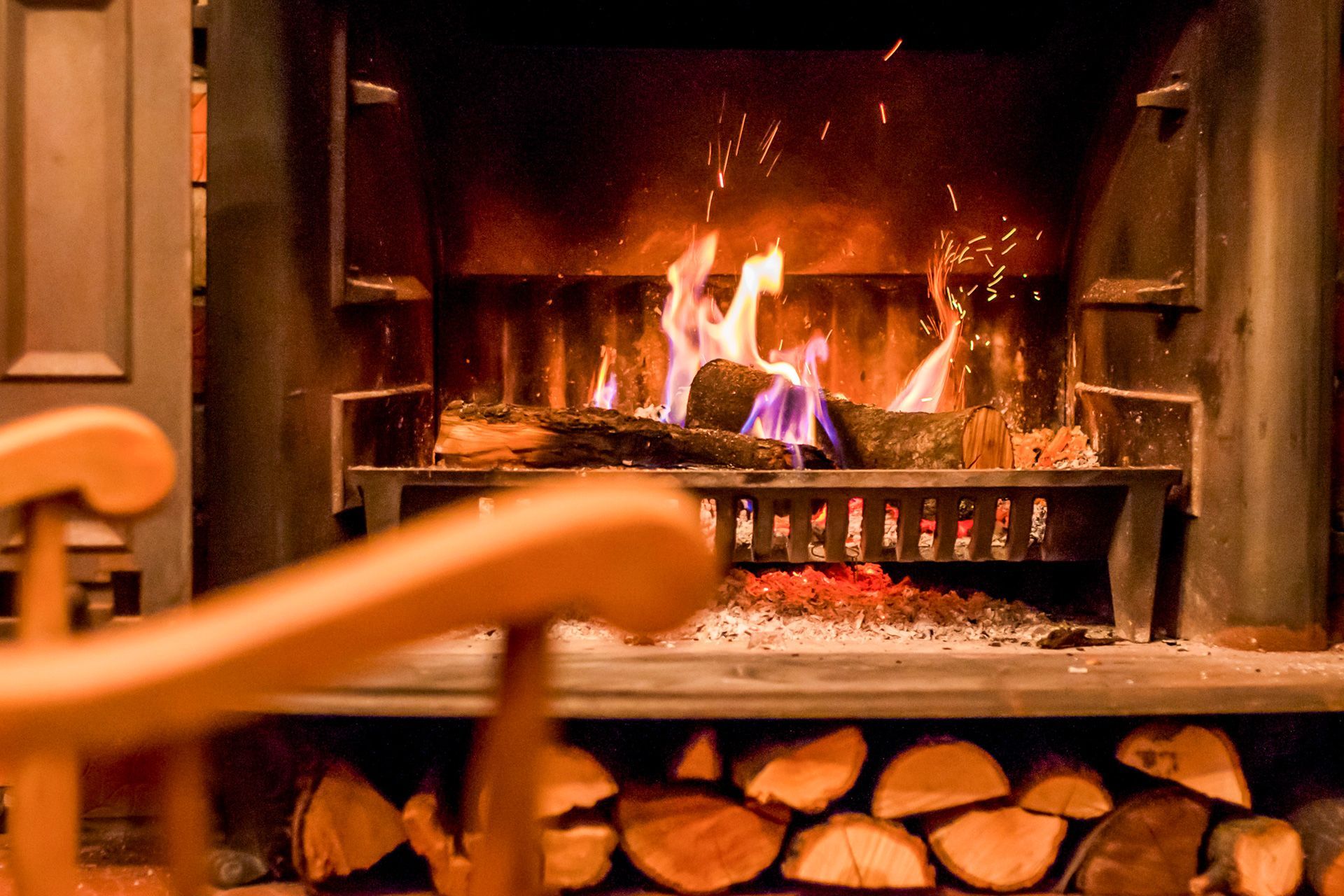
A glass door keeps the combustion area enclosed while still allowing homeowners to see the fire.
Many inserts also use blowers to move heated air into the room.
However, an insert should not be viewed as something that can simply be pushed into any fireplace opening.
Compatibility and installation matter.
Is a Fireplace Insert the Same as a Wood Stove?
They are similar but not identical.
A freestanding wood stove sits outside the fireplace and usually stands on legs or a pedestal.
A wood-burning fireplace insert is designed to fit inside an existing approved fireplace opening.
Both may use similar combustion technology, but their installation requirements are different.
The terms "wood insert," "wood stove insert," and "wood-burning fireplace insert" are often used to describe the same general type of appliance.
When shopping, focus on the actual listing and installation instructions rather than the wording used by a seller.
What Types of Wood-Burning Fireplace Inserts Are Available?
Modern wood inserts generally use one of several combustion designs.
Understanding the differences can help you compare models without getting lost in technical language.
Non-Catalytic Inserts
A non-catalytic insert burns smoke and gases more completely by using carefully controlled airflow, internal baffles, and secondary combustion.
These systems do not use a catalytic combustor.
They may appeal to homeowners who want a relatively straightforward operating system with fewer specialized internal components.
However, every model still has its own operating and maintenance requirements.
Catalytic Inserts
Catalytic models use a special combustor that helps burn gases and particles at lower fire temperatures.
The combustor can support longer, controlled burns when the appliance is operated correctly.
It is also a component that requires proper care and may eventually need replacement.
Homeowners considering a catalytic insert should understand how and when the catalyst is engaged and what maintenance the manufacturer requires.
Hybrid Inserts
Some models combine catalytic and non-catalytic combustion methods.
These are often called hybrid systems.
The goal is to combine controlled combustion with cleaner burning across different stages of the fire.
The best design is not automatically the most complicated one. Choose the appliance that fits your heating goals and that you are comfortable operating and maintaining.
How to Choose a Fireplace Wood-Burning Insert
When comparing a fireplace wood-burning insert, begin with the existing fireplace rather than the appliance catalog.
The insert needs to physically fit the opening and be approved for the type of fireplace you already have.
Several factors deserve attention.
1. Determine What Type of Fireplace You Have
The first question is whether the existing fireplace is masonry or factory-built.
Masonry Fireplace
A traditional masonry fireplace is built using materials such as brick, block, mortar, and clay flue components.
Many wood-burning inserts are designed for installation in suitable masonry fireplaces.
Even then, the existing firebox and chimney should be evaluated before installation.
Factory-Built Fireplace
A factory-built fireplace is a manufactured system installed as a complete listed assembly.
It may look similar to a masonry fireplace from inside the room, but the structure behind the finish materials is different.
You cannot assume that a wood insert can be placed inside any factory-built fireplace.
The insert must be specifically approved for that type of installation, and modifications that interfere with the original fireplace listing may not be permitted.
If you cannot identify your fireplace type, have a qualified fireplace professional determine it before shopping for an insert.
2. Measure the Fireplace Opening Carefully
An insert needs more measurements than just the width across the front.
Important dimensions can include:
- Front opening width
- Front opening height
- Rear firebox width
- Firebox depth
- Height toward the rear
- Hearth depth
- Damper area
- Chimney connection area
Many masonry fireboxes taper toward the back.
A model that fits the front opening may still be too large farther inside.
Measurements also affect the surrounding trim panel. The surround should cover the visible gap around the insert according to the manufacturer's installation design.
Do not order an appliance based on one measurement.
3. Choose the Right Heating Capacity
Bigger is not always better.
An oversized insert can make a room uncomfortably hot and may encourage homeowners to run the fire at very low settings.
An undersized appliance may need to work harder to provide the level of heat the homeowner expects.
When comparing models, consider:
- Size of the area you want to heat
- Home layout
- Ceiling height
- Insulation
- Window quality
- Climate
- Whether the insert is supplemental or primary heat
- How heat moves between rooms
Manufacturer heating-area estimates can be useful for comparison, but they are not guarantees. Real homes lose and distribute heat differently.
A local hearth professional can help match the unit to the actual space.
4. Look for an EPA-Certified Wood Insert
New wood-burning fireplace inserts sold as wood heaters in the United States can be EPA-certified models.
Certification addresses particulate-emission standards for the appliance.
When comparing units, look for the permanent certification label and confirm the exact model.
Cleaner combustion also tends to mean that more of the wood is being burned rather than being released as smoke.
However, certification does not replace proper installation, correct fuel, chimney maintenance, or responsible operation.
5. Consider the Chimney Before Buying the Insert
The existing chimney is one of the most important parts of the project.
A new insert should not be used to hide problems in an old chimney.
Before installation, the chimney may need evaluation for conditions such as:
- Cracked or deteriorated masonry
- Damaged flue components
- Heavy deposits
- Blockages
- Water intrusion
- Missing chimney caps
- Previous fire damage
- Improper dimensions
- Other visible deterioration
An attractive new appliance cannot correct a damaged chimney.
If deeper internal examination is needed, a qualified chimney specialist may recommend an appropriate camera inspection or other evaluation before installation.
Why Does a Fireplace Insert Need a Chimney Liner?
Modern insert installations commonly use a listed chimney liner or venting system that connects the insert to the chimney termination.
The liner provides a defined path for smoke and combustion gases.
The exact liner size and material must match the appliance and installation requirements.
For masonry chimneys, stainless steel liners are commonly used with modern wood-burning inserts.
A full-length connection from the appliance to the top of the chimney can help provide consistent venting and make future maintenance more straightforward.
Before installation, a professional chimney inspection can help identify visible or accessible concerns that may affect the liner, flue, or overall venting system.
Do not choose a liner based only on the existing chimney opening.
The insert manufacturer specifies the required flue connection and venting arrangement.
Installation should follow those instructions along with applicable requirements.
Can You Install an Insert Into Any Existing Fireplace?
No.
This is one of the most important points in this buyer's guide.
A masonry fireplace must have enough space, suitable construction, proper clearances, and an acceptable chimney system.
A factory-built fireplace creates additional limitations because the insert and existing fireplace must be approved for that combination.
Do not assume that removing parts of an existing fireplace will make an insert fit.
Some components are part of the fireplace's tested safety system.
A qualified installer should determine whether the proposed model is approved for the existing fireplace before any modification is made.
What About the Hearth and Clearances?
An insert becomes very hot during operation.
The area around it must provide the required protection from combustible materials.
Important areas can include:
- Hearth extension
- Mantel
- Wood trim
- Flooring
- Nearby walls
- Furniture
- Decorative materials
Required clearances vary by model.
Do not assume an existing hearth is automatically large enough simply because it worked with the old open fireplace.
The insert's installation instructions define the required protection and clearances.
A decorative surround also does not eliminate clearance requirements.
Do Wood Fireplace Inserts Need Electricity?
Many inserts can produce heat without electricity, but models with blowers need electrical power for the fan.
The blower helps move heated air around the insert and into the room.
Before buying, consider where the power will come from.
A visible extension cord running across the hearth or floor should not become the long-term solution.
Discuss electrical needs during installation planning.
Also ask what happens during a power outage. The fire may continue to produce heat even when the blower is not operating, depending on the appliance design.
What Features Should Buyers Compare?
Once compatibility and installation requirements are clear, you can compare convenience features.
Useful features may include:
Blower Controls
Adjustable blowers let homeowners control how quickly heated air moves into the room.
Air Controls
Simple, clearly marked controls can make the appliance easier to operate correctly.
Glass Size
A larger viewing area may be important if you want to maintain the visual appeal of a traditional fireplace.
Door Design
Look at handle operation, gasket construction, and loading access.
Firebox Size
A larger firebox may accept longer pieces of firewood and support longer burns, but it also affects appliance size and heat output.
Ash Handling
Some units make ash cleanup easier than others.
Catalytic Controls
If considering a catalytic or hybrid unit, make sure you understand how the combustor is operated and maintained.
Do not choose a model based on features you are unlikely to use.
What Wood Should You Burn in an Insert?
Use dry, properly seasoned firewood.
Wet wood is harder to burn efficiently and creates more smoke.
Never use the insert as a household trash burner.
Avoid burning materials such as:
- Painted lumber
- Pressure-treated wood
- Plastic
- Household garbage
- Coated cardboard
- Construction debris
Follow the appliance manufacturer's fuel instructions.
Different appliances may also have limits on log size and loading methods.
Good firewood and correct operation are essential parts of getting the performance you expected when buying the insert.
Does a Wood-Burning Insert Still Need Chimney Cleaning?
Yes.
An insert does not eliminate chimney maintenance.
Wood combustion can still produce soot and creosote that collect in the venting system.
The chimney and liner need appropriate inspection and cleaning based on use and condition.
A properly installed insert may make some aspects of chimney service different from an open fireplace, so tell the chimney professional exactly what appliance is installed.
Do not assume that cleaner-looking fireplace glass means the liner is clean.
Most of the venting system remains hidden.
Should You Have the Existing Fireplace Inspected Before Installation?
Yes.
This is one of the most practical steps homeowners can take before investing in an insert.
The condition of the existing fireplace and accessible chimney components may affect whether further specialist evaluation or repairs are needed first.
Visible concerns could include:
- Cracked firebox masonry
- Damaged mortar
- Water staining
- A deteriorated damper
- Visible flue damage
- Heavy deposits
- Exterior chimney cracking
- Missing caps
- Flashing concerns
- Improper clearances
Finding these issues before the insert is installed is better than discovering them after much of the original firebox is hidden behind the new appliance.
What Should Buyers Know About a Home With an Existing Insert?
If you are buying a Kentucky home that already has a wood-burning insert, do not assume that the appliance was installed correctly simply because it has been used for years.
Ask for any available:
- Installation records
- Owner's manual
- Model information
- Permit documentation
- Chimney service records
- Repair history
- Previous inspection reports
Look for the manufacturer's label whenever it is safely accessible.
Knowing the exact appliance model can help a fireplace professional determine the proper installation and maintenance requirements.
What Can CHC Home Inspection Evaluate?
CHC Home Inspection provides visual, non-invasive fireplace inspections for buyers, sellers, and homeowners throughout Kentucky.
Where accessible and visible, the inspection may include areas such as:
- Fireplace exterior
- Hearth
- Surround
- Visible firebox areas
- Accessible damper components
- Visible flue components
- Accessible chimney exterior
- Masonry
- Staining
- Water intrusion
- Clearance concerns
- Visible deterioration
With an installed insert, some parts of the original fireplace may no longer be visible.
That limitation matters.
CHC does not remove installed fireplace inserts, dismantle appliances, perform invasive chimney camera scans, or certify that concealed installation details meet every manufacturer requirement.
If visible conditions or the property's history raise concerns, further evaluation by an appropriate chimney or hearth specialist may be recommended.
Why Inspection Matters Before Buying a Home With an Insert
A wood insert may look like an attractive upgrade, but a buyer needs to consider both the appliance and the system around it.
Questions worth asking include:
- Is the insert approved for this fireplace type?
- Is the model identification available?
- Is the liner visible or documented?
- Has the chimney been maintained?
- Are clearances appropriate?
- Is there visible heat damage?
- Is there water intrusion?
- Does the hearth provide suitable protection?
- Are service records available?
A standard home inspection may not answer every technical question because parts of the installation are concealed.
Its value is identifying visible conditions and helping determine when a specialist should look deeper.
Common Buying Mistakes to Avoid
Buying Before Measuring
An appliance can look perfect online and still not fit the firebox.
Measure first.
Choosing Only by Heating Rating
Heating capacity matters, but so do installation dimensions, chimney compatibility, and home layout.
Ignoring the Existing Chimney
The chimney is part of the venting system. Its condition should not be an afterthought.
Assuming Every Factory-Built Fireplace Accepts an Insert
Some do not.
Confirm the exact appliance and fireplace compatibility.
Choosing the Largest Unit That Fits
Larger does not always mean better.
The appliance should match the heating needs of the home.
Planning a DIY Installation Without Understanding the Listing
Wood-burning appliances involve heat, fire, clearances, and combustion gases.
Installation mistakes can create serious problems.
Use the manufacturer's instructions and an appropriately qualified installer.
Wood-Burning Inserts in Kentucky Homes
A wood-burning insert can be especially appealing to Kentucky homeowners who enjoy using an existing fireplace but want a more controlled wood-burning appliance.
Kentucky's colder months can provide regular opportunities for fireplace use, while seasonal humidity, rain, storms, and freeze-thaw conditions can affect masonry chimneys over time.
That makes the condition of the existing fireplace and chimney important before an insert is
added.
If you recently purchased an older home, the fireplace may also have a long maintenance history that is difficult to confirm.
Evaluating visible conditions before installation can help identify questions that should be addressed with the installer or chimney specialist.
Conclusion
A fireplace wood-burning insert can turn a compatible existing fireplace into a more controlled wood-burning heating appliance, but selecting the right model requires more than measuring the front opening.
Homeowners should consider fireplace type, firebox dimensions, heating needs, EPA certification, chimney condition, liner requirements, hearth protection, clearances, electrical needs, and professional installation. If you are buying a home with an existing insert, appliance records and chimney maintenance history are also valuable.
Before installing an insert or purchasing a Kentucky property that already has one, CHC Home Inspection can evaluate visible and accessible fireplace and chimney components and document concerns that may need further specialist review. Our visual inspection helps you better understand what can be observed before making your next property decision.
Schedule your fireplace inspection with CHC Home Inspection when you want clear information about accessible fireplace and chimney conditions.
Frequently Asked Questions
What is a wood-burning fireplace insert?
A wood-burning fireplace insert is an enclosed wood-burning appliance designed to fit inside a compatible existing fireplace. It works much like a wood stove but uses the fireplace opening and an approved chimney venting system.
Is a fireplace insert better than an open wood fireplace?
An insert generally provides greater control over combustion and can deliver more usable heat to the room than a traditional open fireplace. The actual performance depends on the appliance, installation, fuel, home, and operating habits.
Can I put a wood-burning insert into any fireplace?
No. The insert must be compatible with the existing fireplace and installation. This is especially important with factory-built fireplaces, which may only allow specifically approved inserts.
Does a wood fireplace insert need a chimney liner?
Modern wood-burning insert installations commonly use an approved liner connected to the insert and chimney. The exact liner type, size, and installation method must follow the appliance manufacturer's requirements.
How do I know what size fireplace insert I need?
Consider both the dimensions of the existing firebox and the amount of space you want to heat. Front width alone is not enough. Depth, rear width, opening height, hearth dimensions, clearances, and chimney connection also matter.
Does CHC Home Inspection inspect wood-burning fireplace inserts?
CHC performs visual, non-invasive fireplace inspections of visible and accessible components. Inspectors do not remove an installed insert or perform invasive chimney camera scans. Specialist evaluation may be recommended when hidden installation or flue conditions need further review.
Should I have a fireplace inspected before installing a wood insert?
Yes. Evaluating the existing fireplace and accessible chimney components before installation can identify visible damage, moisture, deposits, masonry concerns, or other conditions that may need attention before the insert is installed.
Disclaimer: The information on this website and blog is for general informational purposes only and is not professional advice. We make no guarantees of accuracy or completeness. We disclaim all liability for errors, omissions, or reliance on this content. Always consult a qualified professional for specific guidance.
Search Blog
Contact Us
Recent Post


Certificates


5+
Years Experienced
1200+
5 Star Reviews