
Chimney Fireplace: Why Is Smoke Coming Into My Home?
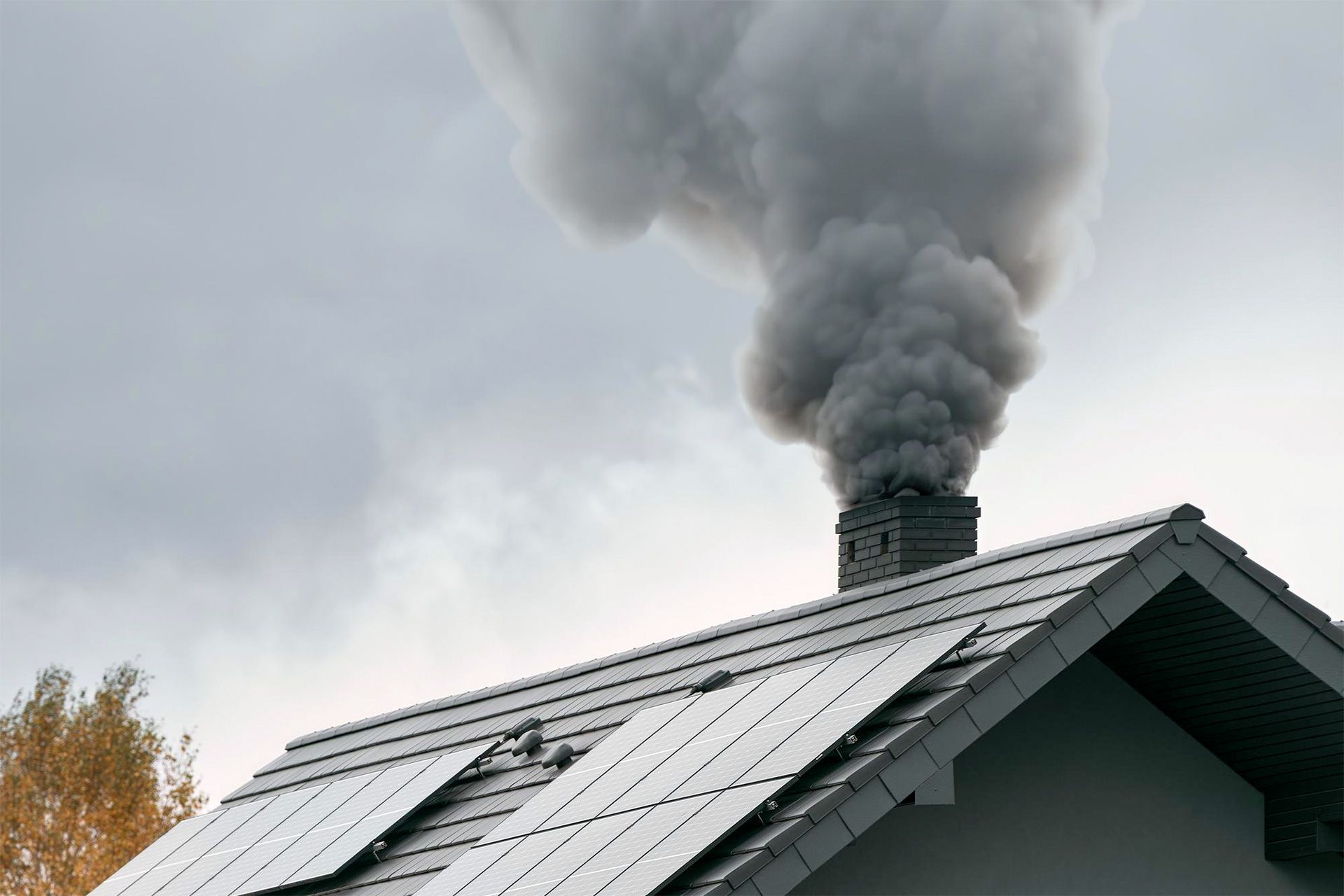
Smoke from a chimney fireplace can enter your home when the system does not create enough upward draft to carry smoke outside. Common causes include a closed damper, a cold or blocked flue, negative indoor air pressure, wind, poor chimney design, or wet firewood. If smoke keeps entering the room, stop using the fireplace until the cause is evaluated. Heavy smoke, unusual heat, sparks, or a carbon monoxide alarm require immediate attention.
A smoky fireplace is more than an annoyance. It can affect indoor air quality and may show that combustion gases are not venting as intended. Understanding the cause can help you know when an operating issue may be involved and when professional evaluation is the safer next step.
Why Does a Chimney Fireplace Need a Draft?
A fireplace depends on draft, the upward movement that carries hot gases and smoke through the flue and out of the home.
When a fire heats the air inside the flue, that warm air rises. As air leaves the house, replacement air must enter the room. When the flue is clear and the fireplace gets enough makeup air, smoke should move upward.
Problems start when that airflow becomes weak, restricted, or reversed.
A fireplace chimney works as part of a larger airflow system. The firebox, damper, flue, chimney height, indoor air pressure, and outdoor weather can all affect performance.
What Causes Fireplace Smoke to Enter the House?
Several conditions can push smoke into the room instead of allowing it to leave through the chimney.
A Closed or Damaged Damper
The damper controls the opening between the fireplace and flue. It should be fully open before a wood fire is started.
If it is closed, stuck, damaged, or partly open, smoke may not have enough room to escape. It can then spill from the firebox into the living area.
If a damper does not move normally, do not force it. Have the component evaluated.
A Cold Flue
A cold flue can resist upward airflow when a fire is first lit. Cold, dense air may sit inside the chimney while warm smoke is trying to rise.
This can happen after the fireplace has been unused or during cold weather. If smoke happens only at startup and clears quickly, a cold flue may be involved.
Smoke that continues after the fire is established may point to another problem.
A Blocked Flue
Leaves, nesting materials, debris, damaged components, or heavy deposits can restrict the flue.
A partial blockage may still allow some air to move, but not enough to handle the smoke produced by a fire. Because much of the flue is hidden, a blockage may not be visible from the room.
Can Negative Air Pressure Cause Fireplace Backdrafting?
Yes. Negative indoor air pressure is an important cause of fireplace backdrafting.
Kitchen range hoods, bathroom exhaust fans, clothes dryers, and other equipment remove air from a house. Tight, energy-efficient homes may not replace that air quickly enough.
When indoor pressure drops, the house may pull replacement air through available openings. In some cases, that opening is the chimney.
Instead of smoke moving upward, air and combustion products can be pulled back toward the living space.
This explains why a chimney fireplace may smoke only when a strong exhaust fan or another appliance is operating.
If the problem changes when fans, windows, doors, or HVAC equipment are used, pressure imbalance may be part of the issue. Opening a window may change the symptoms, but it should not be treated as a permanent repair.
Why Does My Fireplace Smoke on Windy Days?
Wind changes air pressure around the top of a chimney.
Roof shape, chimney height, nearby trees, surrounding buildings, and wind direction can create downdrafts that interfere with normal airflow. A fireplace that works well on calm days may smoke during certain wind conditions.
If this pattern happens repeatedly, tell the chimney professional when the problem occurs. That information can help determine whether chimney height, termination, cap design, or surrounding airflow needs closer evaluation.
Can Wet Firewood Cause More Smoke?
Yes. Wet or unseasoned wood tends to burn cooler and create more smoke than properly seasoned firewood.
A smoky fire can overwhelm an already weak chimney draft. Cooler fires may also contribute to faster deposit buildup inside the flue.
Use properly seasoned firewood and follow the fireplace manufacturer's instructions. Avoid burning trash, treated lumber, painted wood, or other materials the system was not designed to burn.
Can Fireplace or Chimney Design Cause Smoke Problems?
Yes. Fireplace dimensions and chimney design affect draft.
A large fireplace opening connected to a flue that cannot move enough air may allow smoke to spill into the room. Flue size, chimney height, firebox design, and the way the chimney terminates above the roof can all matter.
If a fireplace has smoked since the home was built or remodeled, the cause may involve construction or design rather than simple maintenance.
Changes to the home can also affect a fireplace that once worked normally. New windows, added insulation, air sealing, remodeling, or a stronger kitchen exhaust system can change the home's airflow.
Does an Indoor Chimney Affect Draft?
Homeowners sometimes use indoor chimney to describe a chimney or flue that passes through much of the home's interior.
A chimney located mostly inside the building may stay warmer than an exterior masonry chimney during cold weather. A warmer flue can sometimes support draft more easily, but location alone does not determine performance.
An indoor chimney can still have blockages, damaged components, incorrect sizing, pressure problems, or other venting concerns.
The full fireplace and venting system should be considered when smoke enters the home.
What About a Gas Chimney or Gas Fireplace?
The phrase gas chimney usually refers to a chimney or vent serving a gas fireplace or another gas-burning appliance.
Gas fireplaces use different venting designs. Some connect to a lined chimney, while others use sealed direct-vent systems.
A gas fireplace should not send combustion products into the living space. Sooting, unusual odors, discoloration, repeated shutdowns, or a carbon monoxide alarm may indicate a problem that needs prompt attention.
Do not keep operating a gas appliance to test whether the issue goes away. If a gas chimney or fireplace appears to have a venting problem, turn the appliance off if it is safe to do so and contact the appropriate qualified professional.
Is Fireplace Smoke Inside the Home Dangerous?
Fireplace smoke contains fine particles and other combustion byproducts that are meant to leave the home through the chimney.
Poor venting can also create concern about carbon monoxide. Carbon monoxide has no color or smell, so homeowners cannot rely on visible smoke or odor to determine whether it is present.
Homes with fireplaces and other fuel-burning equipment should have working smoke and carbon monoxide alarms. Follow the alarm manufacturer's installation, testing, and replacement instructions.
If a carbon monoxide alarm activates, follow its emergency instructions. Do not ignore the warning because the fireplace looks normal.
When Should You Stop Using the Fireplace?
Stop using the fireplace when smoke repeatedly enters the room or when the draft suddenly changes.
Other warning signs include:
- Heavy smoke filling the room
- Strong or unusual combustion odors
- A carbon monoxide alarm
- Flames or sparks from the chimney
- Roaring or popping sounds
- Unusual heat around the fireplace or chimney
- Visible damage around the firebox or damper
If you suspect an active chimney fire, leave the home and call 911.
Do not keep relighting the fireplace to see if the problem repeats. Smoke entering the room is a sign that the cause should be identified before normal use continues.
What Can Homeowners Check Before Seasonal Use?
A few visual checks can help homeowners notice obvious problems before lighting a fire.
Make sure combustible items are away from the fireplace opening. Check whether the damper appears to move normally. Look for cracked firebox materials, stains, water marks, loose components, or debris.
From a safe ground-level position, look for visible exterior chimney damage such as deteriorated masonry or a missing chimney cap.
These checks do not replace chimney cleaning, internal flue evaluation, or specialized diagnosis when those services are needed.
How Can a Home Inspection Help?
A home inspection can identify visible and accessible concerns around the fireplace and chimney.
CHC Home Inspection provides visual, non-invasive fireplace inspections for buyers, sellers, and homeowners across Kentucky. Depending on access and inspection scope, visible portions of the firebox, hearth, damper, surround, flue area, chimney exterior, and related components may be evaluated.
The goal is to document observable concerns and explain when further professional evaluation may be needed.
CHC Home Inspection does not perform invasive chimney camera scans, chimney sweeping, or specialized gas appliance repairs. Conditions that require deeper flue evaluation, cleaning, repairs, or gas venting diagnosis should be handled by the appropriate qualified professional.
Why Smoke Problems Matter in Kentucky Homes
Kentucky homes include older masonry fireplaces, newer factory-built systems, and gas fireplaces. Many homes have also been remodeled or weatherized over time.
Cold weather can affect flue temperature. Wind can alter pressure around the chimney. Tighter construction and powerful exhaust fans can change indoor airflow. Older chimneys may also show moisture damage, deterioration, or past repairs.
Home buyers may not know when a fireplace was last used, cleaned, or professionally evaluated. Visible smoke staining, damaged masonry, unusual odors, or other concerns can provide useful clues that further assessment is needed.
A visual inspection can help document accessible conditions before a buyer, seller, or homeowner decides what to do next.
Conclusion
Smoke from a chimney fireplace entering the home usually means the draft or venting system is not working as intended. A closed damper, cold or blocked flue, negative pressure, wind, wet wood, or system design may be responsible.
Repeated smoke entry should not be treated as normal. Stop using the fireplace until the cause is evaluated. If you suspect a fire or carbon monoxide emergency, leave the home and seek emergency assistance.
CHC Home Inspection helps Kentucky buyers, sellers, and homeowners better understand the visible condition of fireplaces and accessible chimney components. Our inspectors document observable concerns clearly and explain when further evaluation by a qualified chimney professional may be appropriate.
Schedule
your
fireplace inspection with CHC Home Inspection to get clear, practical information about the accessible fireplace and chimney components in your home
Frequently Asked Questions
Why is smoke coming out of my fireplace instead of going up the chimney?
The fireplace may not have enough upward draft. A closed damper, cold or blocked flue, negative indoor pressure, wind, wet firewood, or chimney design problem can cause smoke to spill into the room.
Why does my chimney fireplace smoke when I first light it?
A cold flue may temporarily resist upward airflow when a fire starts. If the smoke does not clear as the flue warms, another draft, blockage, or venting problem may be involved.
Can an exhaust fan make my fireplace smoke?
Yes. Strong kitchen hoods, bathroom fans, and clothes dryers can lower indoor air pressure. In a tight home, that pressure difference may interfere with chimney draft and contribute to backdrafting.
Does a gas chimney produce smoke?
A properly operating gas fireplace should not vent combustion products into the room. Sooting, unusual odors, discoloration, or carbon monoxide alarm activity should be evaluated promptly by an appropriate professional.
Is an indoor chimney less likely to have draft problems?
Not necessarily. An interior chimney may stay warmer than some exterior chimneys, but draft also depends on flue size, height, condition, indoor pressure, weather, and system design.
Can a home inspector tell why my fireplace is smoking?
A home inspector can identify visible and accessible conditions that may contribute to a problem. Some causes require specialized chimney camera evaluation, cleaning, airflow testing, or gas appliance diagnosis.
Should I keep using a fireplace if smoke only comes inside occasionally?
No. Repeated smoke entry should be evaluated rather than accepted as normal. Stop using the fireplace if the problem continues, becomes heavy, or occurs with unusual odors, heat, alarms, or other warning signs.
Disclaimer: The information on this website and blog is for general informational purposes only and is not professional advice. We make no guarantees of accuracy or completeness. We disclaim all liability for errors, omissions, or reliance on this content. Always consult a qualified professional for specific guidance.
Search Blog
Contact Us
Recent Post
Certificates


5+
Years Experienced
1200+
5 Star Reviews